A well-built deck is one of the best investments for a Boston-area home — it extends your living space outdoors and makes the most of New England's beautiful (if short) summer season. Here's everything you need to know about building a deck in the Greater Boston area.
Deck Building Costs in Boston (2026)
Costs depend primarily on size, material, and complexity:
- Pressure-treated wood: $25–$45/sq ft installed. The most budget-friendly option. Requires staining every 2–3 years.
- Composite (Trex, TimberTech): $40–$70/sq ft installed. Higher upfront cost but virtually no maintenance. Doesn't rot, warp, or splinter.
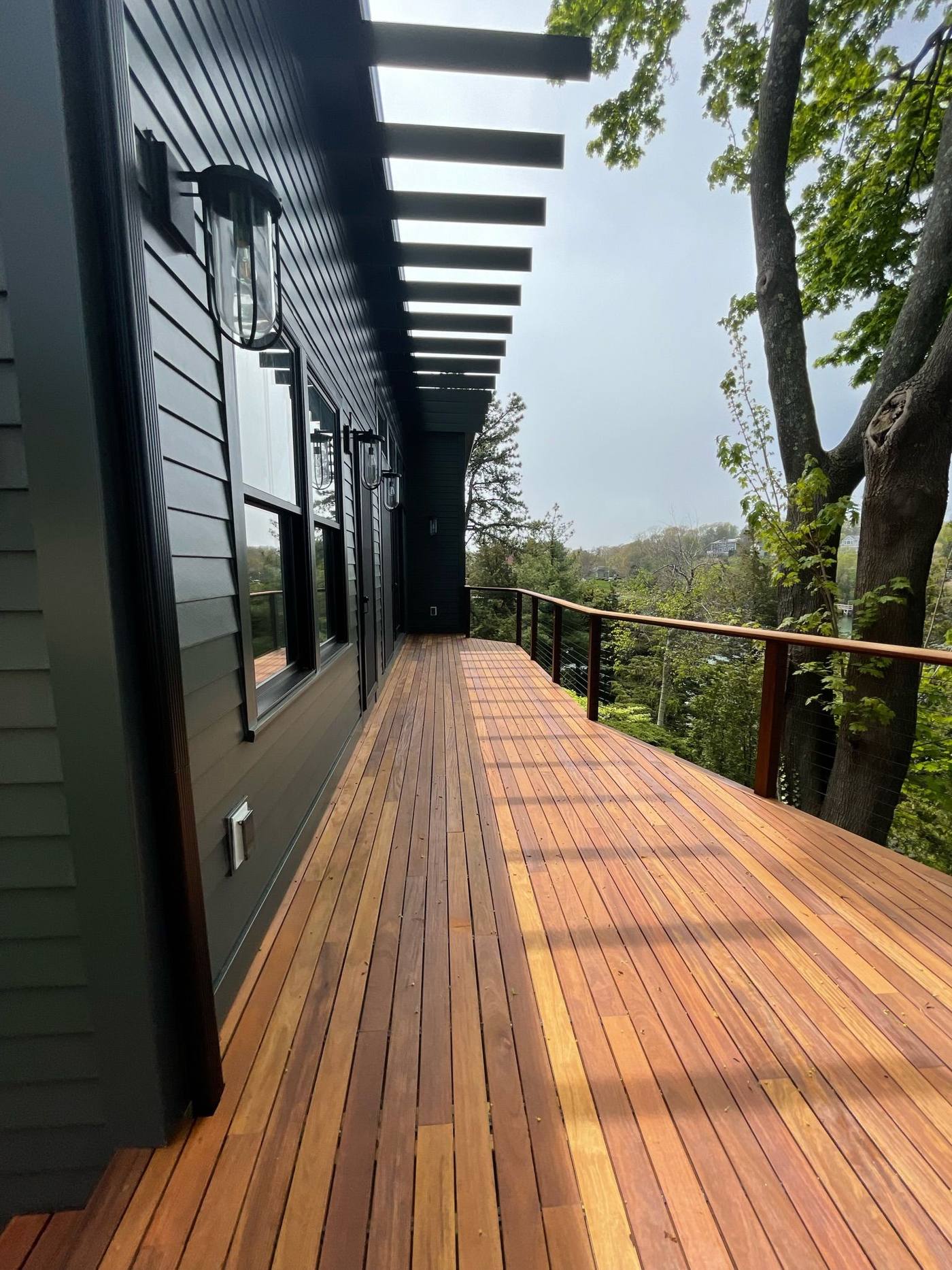
- Hardwood (Ipe, Mahogany): $50–$90/sq ft installed. Premium natural look with exceptional durability. Needs annual oiling.
For a typical 300-square-foot deck, expect $7,500–$13,500 for pressure-treated wood or $12,000–$21,000 for composite. Add 20–30% for railings, stairs, and any built-in features (benches, planters, lighting).
Choosing Your Deck Material
After 25 years of building decks in the Boston area, here's our honest take:
- Best value: Pressure-treated wood. If you don't mind staining every few years, it's hard to beat the price-to-quality ratio.
- Best for low maintenance: Composite. It costs more upfront but you'll never stain, seal, or replace rotted boards. Over 15+ years, total cost of ownership is comparable to wood.
- Best for luxury: Ipe hardwood. Incredibly durable and naturally beautiful, but expensive and requires specialized installation.
Ready to discuss your project?
Deck Permits in Massachusetts
In virtually every Massachusetts city and town, building a new deck requires a building permit. The permitting process typically involves:
- Plot plan: Showing the deck's location relative to property lines and setback requirements.
- Construction drawings: Detailing footings, framing, railing, and stairs.
- Inspections: Footing inspection (before pouring concrete) and final inspection (complete deck).
Permit fees typically run $100–$400 depending on your municipality. We handle the entire permitting process from application through final inspection.
Design Considerations for New England Decks
Building a deck in the Boston area comes with some regional considerations:
- Frost depth: Massachusetts requires footings to extend below the frost line (typically 48 inches). This means deck posts sit on concrete piers that go deep — not just surface blocks.
- Snow load: Framing must be engineered to handle snow loads. We use larger joists and tighter spacing than you'd see in warmer climates.
- Drainage: Proper slope and drainage prevent water pooling and ice formation. We build a slight pitch away from the house on every deck.
- Ledger board waterproofing: Where the deck attaches to your house is the most critical waterproofing point. We use proper flashing and waterproof membranes to prevent water intrusion into your home's framing.
Popular Deck Features in Boston
- Cable railing: Modern look with unobstructed views. Great for waterfront or elevated decks.
- Built-in lighting: LED post cap lights and stair risers extend usability into evening hours.
- Pergolas: Partial shade structures that define outdoor rooms. Can be fitted with retractable canopies.
- Multi-level designs: For sloped yards — common in towns like Newton and Quincy — multi-level decks follow the grade naturally.
Frequently Asked Questions
How long does it take to build a deck?
Most decks are built in 1–2 weeks of active construction. Planning, permitting, and material lead times add 3–6 weeks before construction starts.
What's the best time of year to build a deck?
Late spring through early fall offers the best conditions. Concrete footings can't be poured in freezing weather, and composite materials are easier to work with in moderate temperatures. Check our seasonal renovation guide for more detail.
Will a deck increase my home's value?
Yes. Decks in the Greater Boston area typically recoup 65–75% of costs at resale. More importantly, a deck makes a home more attractive to buyers and can reduce time on market.
Ready to discuss your project?