HOW-TO
How to Choose a General Contractor in Massachusetts
9 min read
New England weather — ice storms, heavy snow, nor'easters, and summer heat — puts enormous stress on your roof. Most homeowners don't think about their roof until something goes wrong. Here are seven warning signs that it's time to replace your roof, not just patch it.
Architectural asphalt shingles — the most common roofing material in Greater Boston — have a lifespan of 20–30 years. If your roof was installed in the early 2000s or before, it's approaching or past its expected life. Even if it looks okay from the ground, degradation accumulates underneath.
Look at the shingles on the south-facing slope of your roof (that's where sun damage is worst). If edges are curling upward or shingles are buckling and distorting, the material is failing. This won't get better — it only accelerates.
Asphalt shingles are coated with mineral granules that protect against UV and weather. As shingles age, these granules loosen and wash into gutters. If you're seeing sandy, gritty buildup in your gutters, your shingles are losing their protective layer.
Go into your attic on a sunny day and look up. If you see pinpoints of light coming through the roof boards, moisture is getting in too. This often points to deteriorated decking that needs replacement along with the shingles.
Ice dams are a classic New England problem. When heat escapes through your attic, snow melts on the roof and refreezes at the eaves, creating a dam that forces water under shingles. If you've had recurring ice dams, your roof may have hidden water damage. A new roof with proper ice and water shield underlayment — combined with attic insulation improvements — solves this.
If your roofline is sagging or dipping rather than running straight, the underlying decking may be compromised by moisture damage. This is structural and requires immediate attention — not just a cosmetic issue.
A failing roof often means failing insulation. If your heating bills have crept up despite no changes in usage, your roof system — shingles, underlayment, ventilation, and attic insulation — may be the culprit. A new roof installation with proper ventilation can significantly improve energy efficiency.
Don't wait for a leak. Schedule a professional roof inspection — most reputable contractors offer them free. We'll assess the condition of your shingles, flashing, decking, and ventilation and give you an honest assessment.
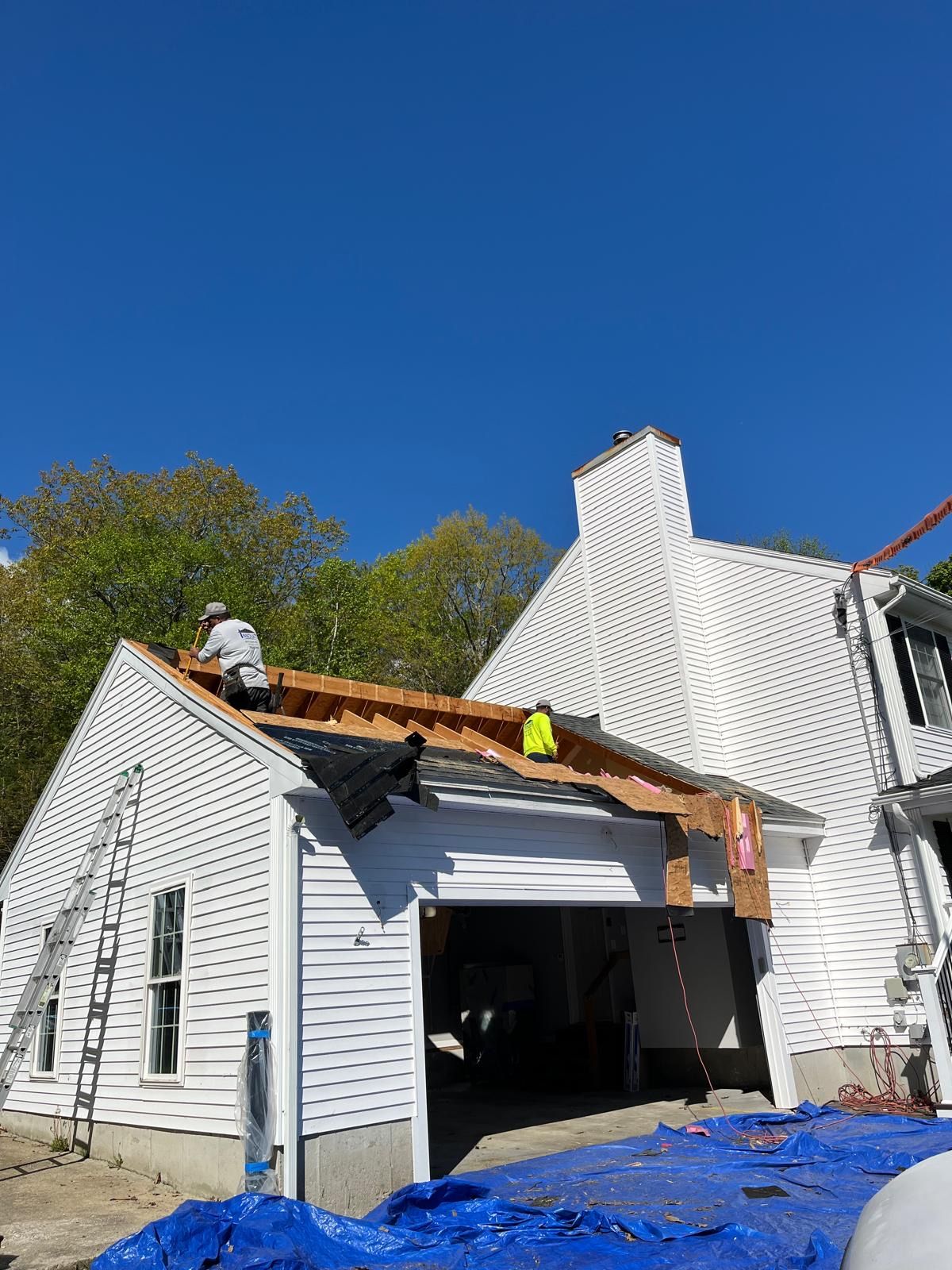
If replacement is needed, a full roof replacement in Greater Boston typically takes 1–3 days and costs $8,000–$25,000 depending on the size of your home, materials selected, and the condition of the underlying decking. Pairing a roof replacement with new siding can save on labor since scaffolding and exterior access is already set up.
If the damage is caused by a storm, tree, or sudden event — generally yes. Normal wear and age is not covered. We can help you document storm damage for insurance claims.
Metal roofs last 40–70 years and shed snow easily, but cost 2–3x more than asphalt. For most Boston-area homeowners, high-quality architectural asphalt shingles offer the best balance of durability, aesthetics, and value.
It's possible but not ideal. Asphalt shingles need temperatures above 40°F to properly seal. We recommend scheduling roof work for spring through fall whenever possible.